Two jobs that get confused
Topping off replaces volume the plants drank or evaporated. Remaking dumps the old solution, cleans the vessel, and starts fresh chemistry. People mix them up and then wonder why the tank smells like a swamp while the waterline looks “fine.”
If volume is low and EC is only slightly off, a calculated top-off can finish the week. If roots are slimy, the solution stinks, or pH/EC chase each other daily, stop nursing it — remake.
Evaporation concentrates salts; plant uptake can remove water faster than nutrients or the reverse depending on crop and climate. That is why the same “top off with water” habit sometimes drops EC and sometimes you still see climb — measure before you pour.
A remake is not a moral failure. It is hygiene. Healthy grows remake on a boring schedule even when plants look fine.
Signals that mean remake now
Foul or sweet-rot smell from the reservoir. Roots turning from cream/white to brown and mushy. Sudden wilt that does not recover after lights cool. Foam that returns after you scrub once.
Also remake after a big crash: you dumped too much pH Down, overshot EC past 2.5 on lettuce, or spilled organics into the tank. Diluting forever rarely restores trust.
Green pea-soup water is a remake plus light-leak fix, not a top-off week. Biofilm on walls that shreds into flakes belongs in the dump bucket.
Daily pH swings larger than about 0.5 after you just corrected are a clue the biology or alkalinity in the tank has gone sideways — remake and recalibrate the meter before blaming the crop.
A calendar that works for most home DWC
In a cool room with leafy greens, many growers remake every 10–14 days and top off with pH’d water between changes. In a warm apartment, shrink that to 7 days. Fruiting plants in recirculating systems often need tighter attention because uptake is aggressive.
Write the mix date on tape on the lid. Future-you will not remember “I think it was Tuesday.”
Small reservoirs drift faster than big ones. A 2–3 gallon kitchen unit can need a weekly remake in summer even when a 20 gallon tote coasted two weeks in winter.
If EC climbs more than ~0.3–0.4 mS/cm between checks despite water top-offs, you are concentrating salts — remake sooner rather than chasing with endless dilution math.
How to remake without killing momentum
Have the new solution mixed and pH’d in a clean bucket before you dump the old one if plants hate dry roots. Lift sites onto a tray, empty and scrub the reservoir, rinse, refill, then reseat plants.
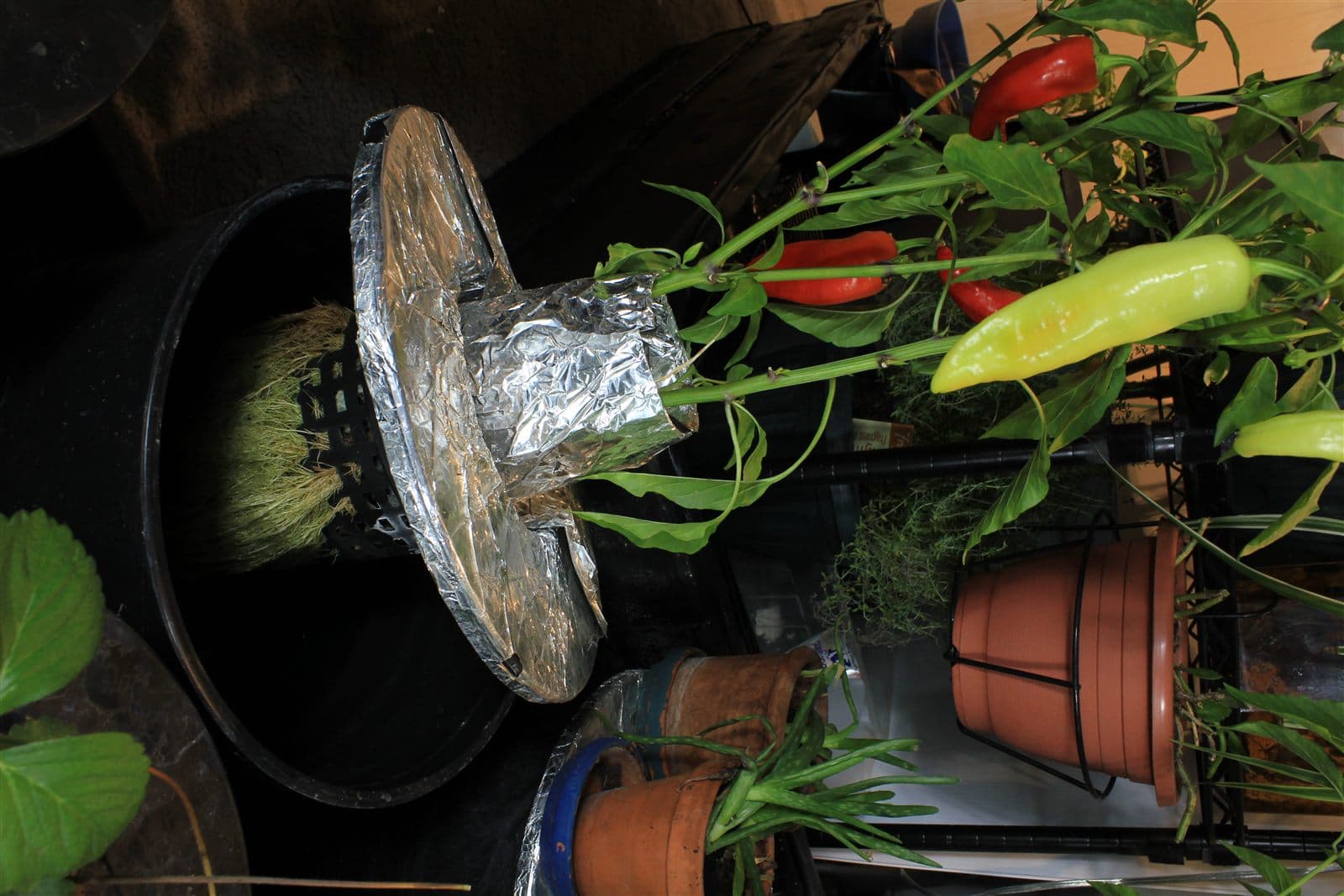
Opaque lids and blocked light leaks matter as much as the nutrient brand. Green water is a sanitation problem, not a reason to buy another bottle of mystery additive.
Scrub corners, the underside of the lid, and the air stone. A pretty-looking waterline with slime under the lid reinfects the new mix within days.
Match temperature roughly: dumping ice-cold mix onto warm roots (or the reverse) shocks plants. Aim new solution within a few degrees of the old tank when you can.
Top-off rules that keep EC honest
Most leafy DWC top-offs between remakes are pH-adjusted plain water. Plants drank water; salts stayed behind. Adding full-strength nutrient every top-off is how EC quietly walks to 1.8+.
If EC fell because plants ate hard (common in heavy fruiting), a partial nutrient top-off can make sense — measure first. Our reservoir top-off calculator helps split water vs feed when the waterline drops.
Always note EC before and after a top-off. That two-line habit teaches your crop’s pattern better than any generic schedule.
Use the tools, then trust the meter
Our top-off calculator helps split plain water vs nutrient when the waterline drops. The EC↔PPM converter stops scale arguments. Neither replaces looking at roots.
If you only change reservoirs when plants already look sick, you are late. Healthy roots and boring numbers are the goal.
Keep pH in roughly 5.5–6.5 for most hydro recipes after every remake. Confirm with a calibrated meter, not the color of the water.
Week-by-week rhythm (leafy DWC example)
Day 0: remake, set EC in the leafy band (often ~0.8–1.2 mS/cm), pH near 5.8–6.2, tape the date. Day 2–3: check pH/EC, top off water if low.
Day 5–7: inspect roots on one plant. Warm rooms — plan remake here. Cool rooms — continue top-offs if numbers and smell are clean.
Day 10–14: remake on schedule even if plants look perfect. Reset biofilm clock before it becomes an emergency.