Capsicum annuum
Hydroponic Peppers & Hot Chili Guide
From sweet bells to hot chilies, peppers excel under high light with stable calcium and potassium.
Difficulty
Intermediate
Days to harvest
70–100 days
pH range
5.5–6.5
EC range
1.8–2.8 mS/cm
PPM range
900–1400 PPM (500 scale)
Temperature
70–85°F (21–29°C)
Light hours
14–16 hours
PPFD target
400–600+ µmol/m²/s
Best systems
Peppers need light, warmth, and time
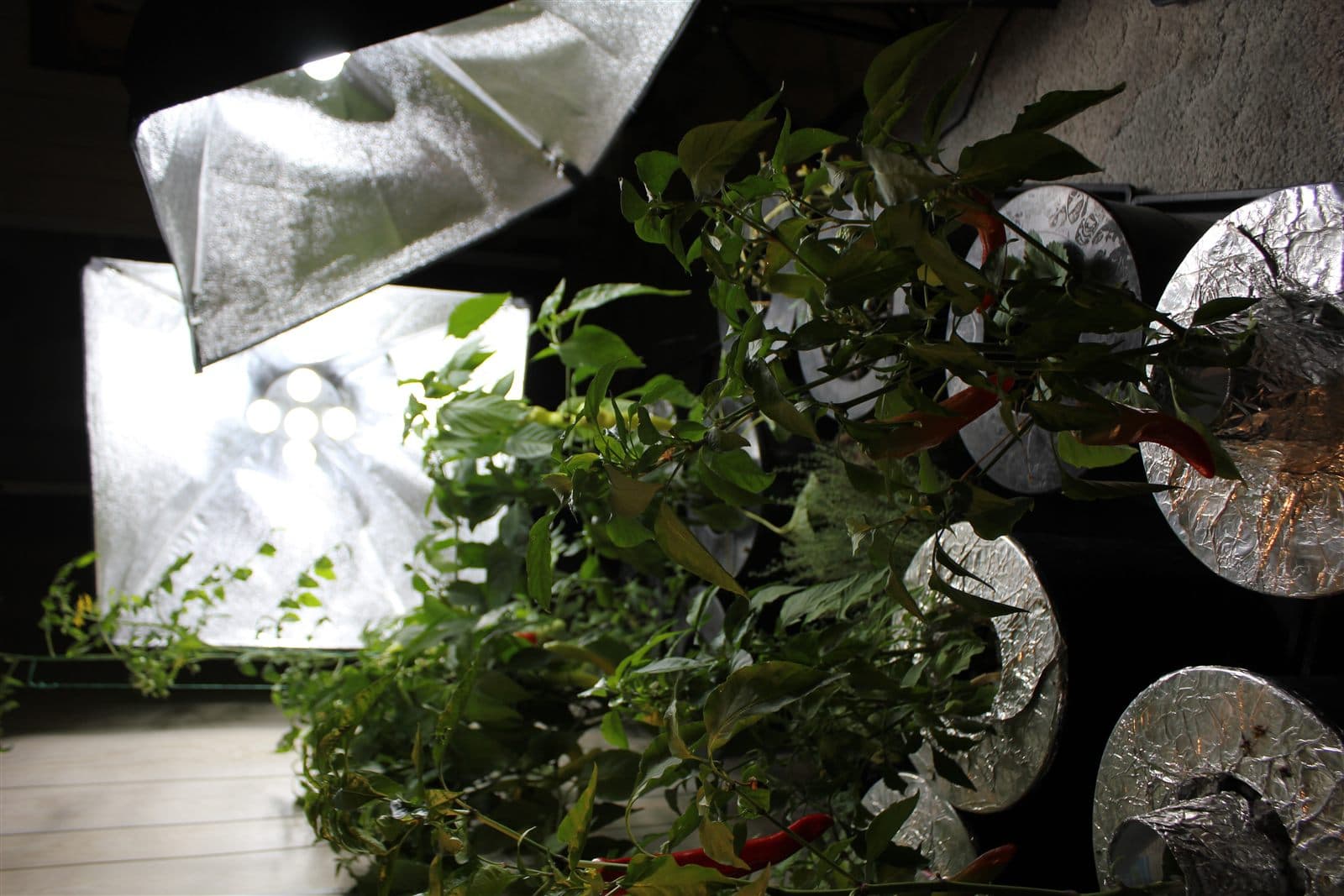
Peppers are slower than leafy greens. Expect roughly 70–100 days to meaningful harvest from transplant under indoor conditions, cultivar dependent. Hot peppers and compact ornamentals often suit indoor tents better than huge bell plants.
Day temperatures 70–85°F with strong light drive flowering. Cool, dim rooms produce lush leaves and few fruits.
Hot peppers vs bell peppers indoors
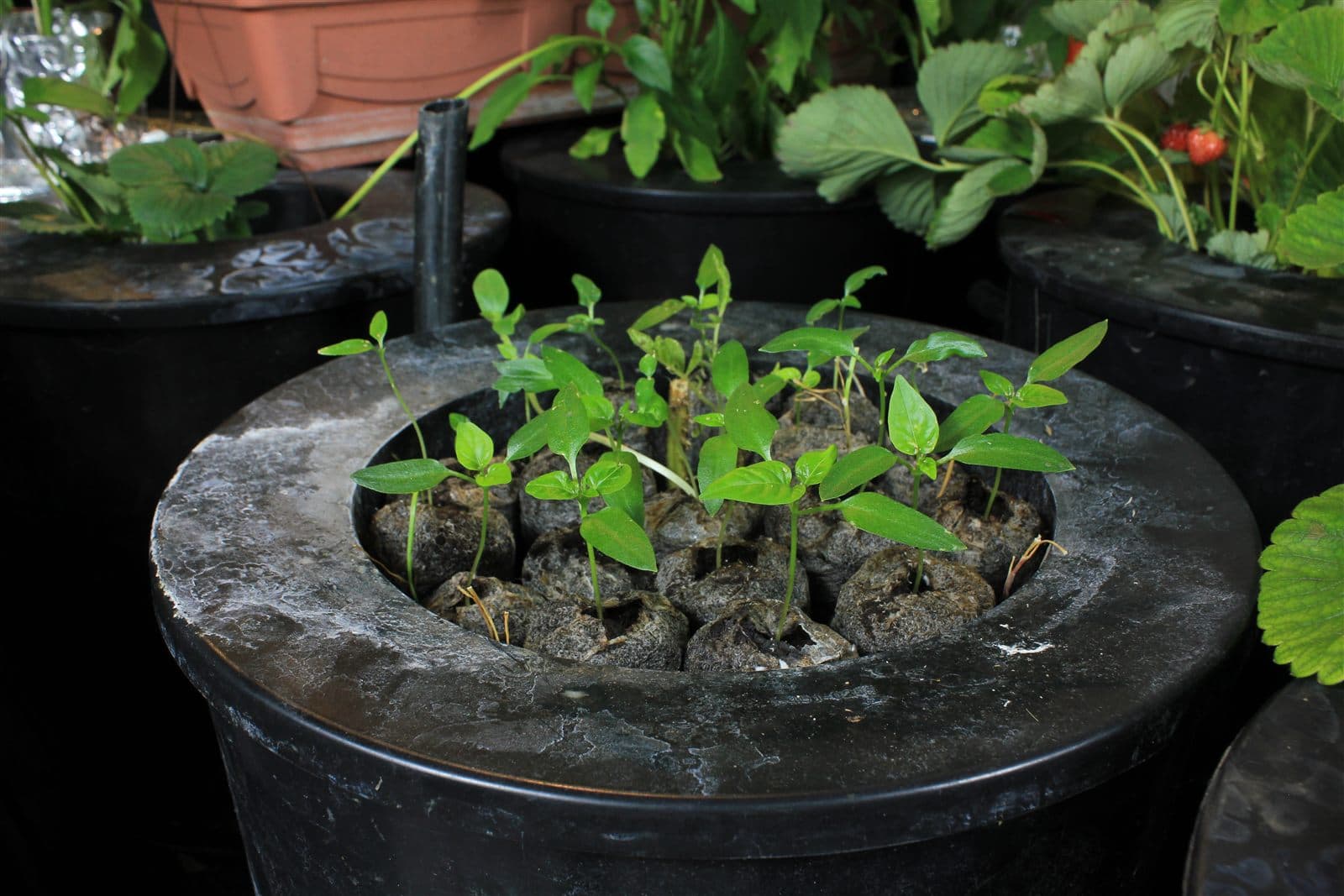
Growing hydroponic hot peppers (cayenne, jalapeño, Thai, habanero types) is usually easier in a home tent than large bell peppers. Compact chili plants finish faster, need less canopy space, and set fruit more reliably under mid-power LEDs.
Big bell peppers need higher total light, heavier staking, and more weeks. If your goal is flavor and heat for cooking, start with compact hot peppers; graduate to bells once your PPFD, calcium, and climate are dialed.
System and training
Dutch buckets and drip in media are reliable. Small chili varieties can work in larger DWC sites with support. Stake or cage early; brittle branches snap under fruit load.
Prune lightly for airflow. Some growers top plants to encourage bushier structure under LEDs.
Stage-by-stage EC / PPM targets
Seedling / early transplant: often ~1.0–1.4 mS/cm (roughly 500–700 PPM on 500 scale).
Vegetative growth: ~1.4–2.0 mS/cm as roots fill out.
Flower and fruit fill: commonly ~1.8–2.8 mS/cm (about 900–1400 PPM on 500 scale) with a potassium emphasis and steady calcium — raise gradually, never jump overnight.
Always convert PPM charts with the correct 500 vs 700 scale. When in doubt, log EC.
Nutrition targets
pH 5.5–6.5. EC commonly ~1.8–2.8 mS/cm (about 900–1400 PPM on 500 scale) as plants mature — start lower for young transplants.
Shift emphasis from vegetative nitrogen toward potassium and adequate calcium through flowering and fruit fill. Keep irrigation consistent to reduce blossom-end rot risk on bells.
Flower set, fruit quality, and common problems
Pepper flowers benefit from airflow and optional hand vibration. Extreme heat plus very low humidity can drop flowers; soggy high humidity invites disease.
PPFD often ~400–600+ µmol/m²/s with 14–16 hour photoperiods for productive indoor plants. Watch for sunscald-like bleaching if intensity jumps suddenly.
Blossom-end rot and soft spots usually track inconsistent water/EC or low calcium movement — stabilize irrigation before dumping more fertilizer. Leafy growth with no fruit usually means too much nitrogen, too little light, or temperatures that never favor set.
Quick lab tips
• Support branches before fruit set — peppers get heavy.
• Slightly lower nitrogen emphasis once flowering begins.
• Maintain RH around ~50–70% for better pollination and calcium movement.
Frequently asked questions
What EC for hydroponic peppers?
Often about 1.8–2.8 mS/cm for established plants. Raise gradually from a gentler transplant strength.
How long do hydroponic hot peppers take?
Many compact chilies start yielding around 70–100 days from transplant indoors, cultivar and light dependent. Hot peppers usually beat big bells on speed in a home tent.
What PPFD for chili peppers?
Aim roughly 400–600+ µmol/m²/s for productive plants. Compact hot peppers tolerate mid-high intensity better than soft lettuce — raise intensity gradually.
Can I grow peppers in DWC?
Yes for smaller chili varieties with strong support and cool, oxygenated solution. Large bells are usually happier in Dutch buckets or drip media beds.
Why are pepper flowers falling off?
Common causes: temperature swings, poor pollination, extreme VPD, or inconsistent irrigation/EC. Stabilize climate before dumping more fertilizer.
Bell peppers or chilies for indoor hydroponics?
Compact chilies are usually easier in small tents. Bells need more light, support, and time.