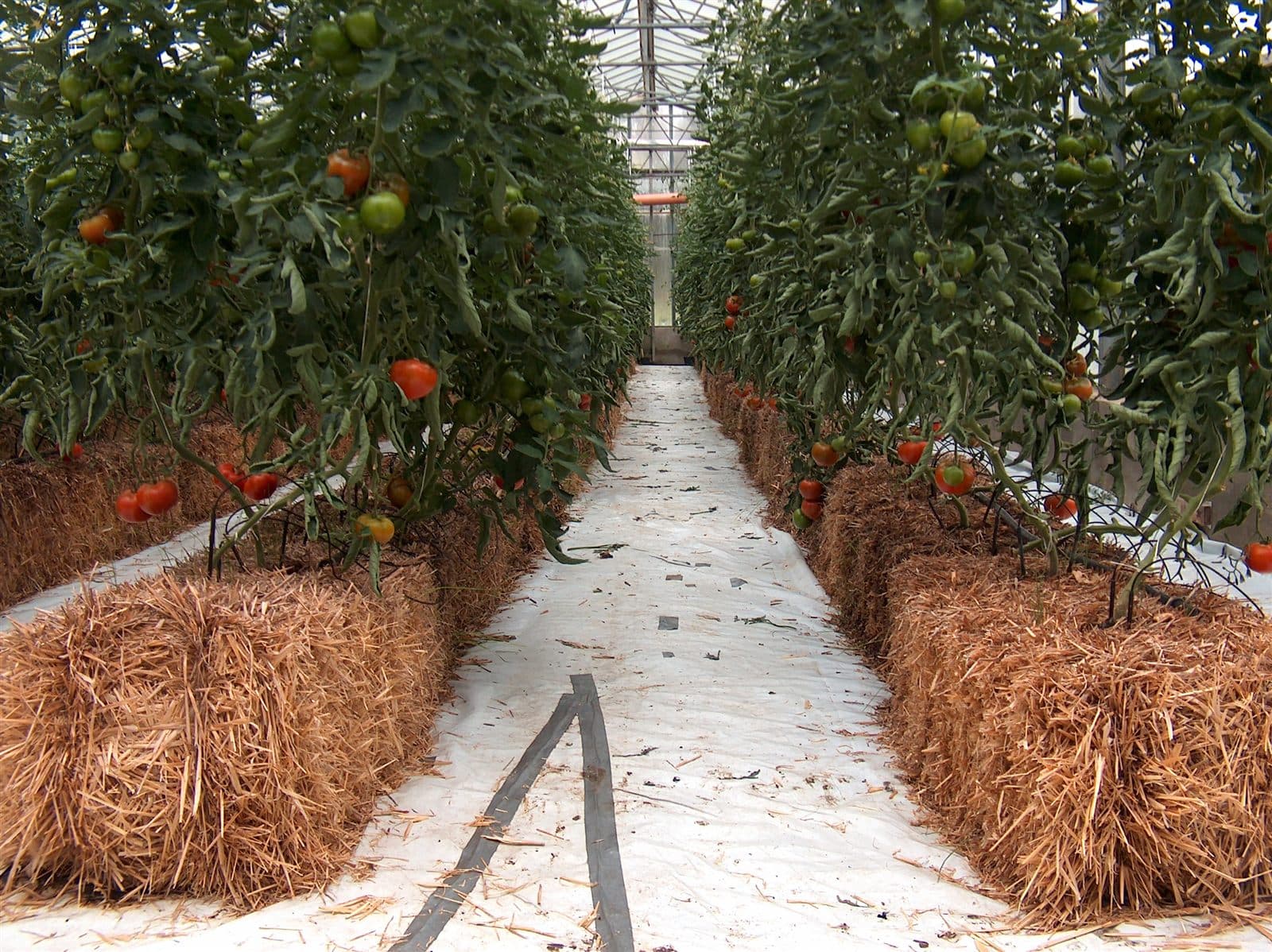
What you’re looking at
Blossom end rot (BER) shows as a dark, sunken patch on the flower end of tomatoes or peppers. It is a calcium transport problem in the fruit tissue — the plant often has calcium in the tank while distal fruit still starves during stress.
Dumping endless Cal-Mag without fixing swings is the classic dead end.
Fruit already marked will not heal into marketable tissue. Judge success on the next clusters after you stabilize the system.
Peppers show similar blossom-end lesions under the same irrigation and EC chaos — treat the cause, not the crop name on the bottle.
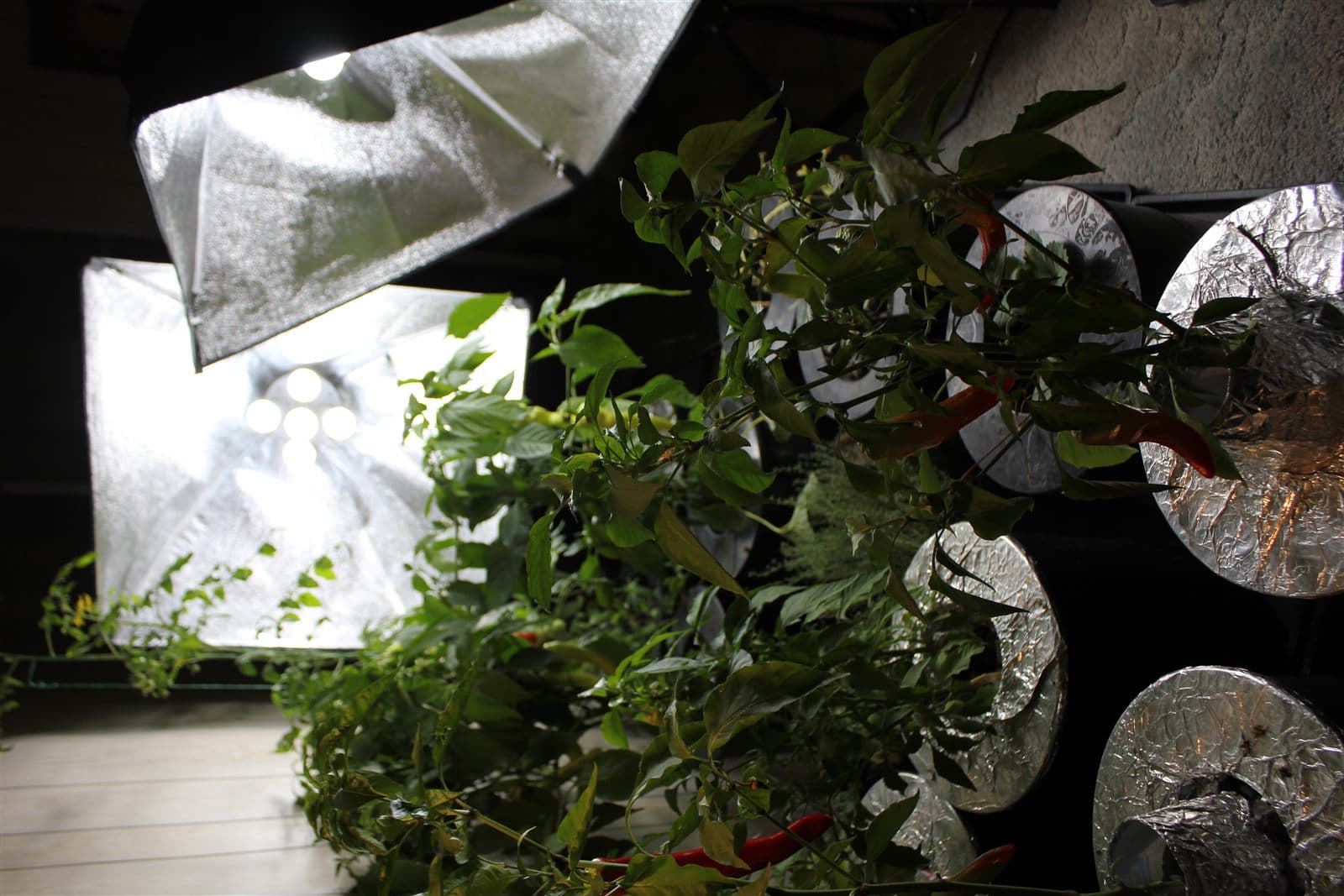
The usual hydro causes
Inconsistent drip/Dutch bucket wet-dry cycles. EC spikes after aggressive top-offs. Root damage or oxygen stress. Very high humidity with zero airflow (weak transpiration). pH out of band so uptake wobbles.
Hard water already rich in calcium can still get BER if pulses are wild — volume consistency beats “more Ca” slogans.
Sudden heat waves raise demand while roots lag. A reservoir that swings from 1.6 to 2.8 mS/cm across three days is a BER machine.
Damaged roots from heat or rot cannot move calcium even when the recipe is perfect — fix roots first.
A practical fix order
1) Stabilize irrigation — same intervals, no drought then flood. 2) Bring EC back into the crop’s sane band and stop daily overshoots. 3) Hold pH roughly 5.5–6.5. 4) Add gentle canopy airflow. 5) Confirm calcium is actually in the recipe and not precipitated from bad mix order.
Only after that consider increasing calcium or reviewing the whole nutrient line. Fruit already damaged won’t heal; prevent the next cluster.
Keep media moisture even in drip and coco — not sopping, not bone dry at the edge of the slab.
If humidity sits extremely high with still air, move air across leaves so transpiration can carry calcium into fruit.
Mix order reminder
If you run dry salts or concentrated parts, never create a calcium phosphate sludge in a jug. Dilute properly. Verify with EC after mixing.
Our tomato and pepper plant guides list stage EC ranges — use them, then trust the fruit you’re seeing this week.
Add calcium nitrate and sulfates/phosphates in an order that keeps them apart in concentrate. When in doubt, mix into a larger volume of water and stir between parts.
Use a nutrient mixing calculator for reservoir volume so “a bit more Cal-Mag” is a number, not a vibe.
Environment checklist for BER
Stable daily irrigation volume. EC logged morning and evening during hot spells. pH in band. Roots cream and firm.
Airflow across canopy; avoid sealed humid tents with zero leaf movement. Avoid huge VPD swings if you track humidity.
Do not prune half the canopy the same week you spike EC — stress stacks. Change one major variable at a time.
FAQ-style clarifications
“But my bottle has calcium.” BER is often delivery, not absence. Stabilize water and EC before buying a fourth calcium product.
“Should I foliar spray calcium?” Foliar can be a temporary bridge for some growers; it does not replace root-zone stability. Fix irrigation either way.
“Is it blossom end rot or disease?” BER is typically a dry sunken leathery patch at the blossom end. Spreading soft rot with smell may be secondary infection — still fix the environment and sanitation.